THE FOUNDATION OF TECHNED
We didn’t invent how students learn.
We built around what research already proved.
Four ideas shape everything TechNed does. They are principles great educators have long believed in, and our work is to help bring them to life for every student.
01
The 2 Sigma Problem
Benjamin Bloom, 1984
Benjamin Bloom observed that students who learn one on one often flourish in ways a busy classroom rarely allows. The reason most students never get that experience isn’t that tutoring falls short. It’s that giving every learner a personal tutor has, until now, been economically and logistically out of reach.
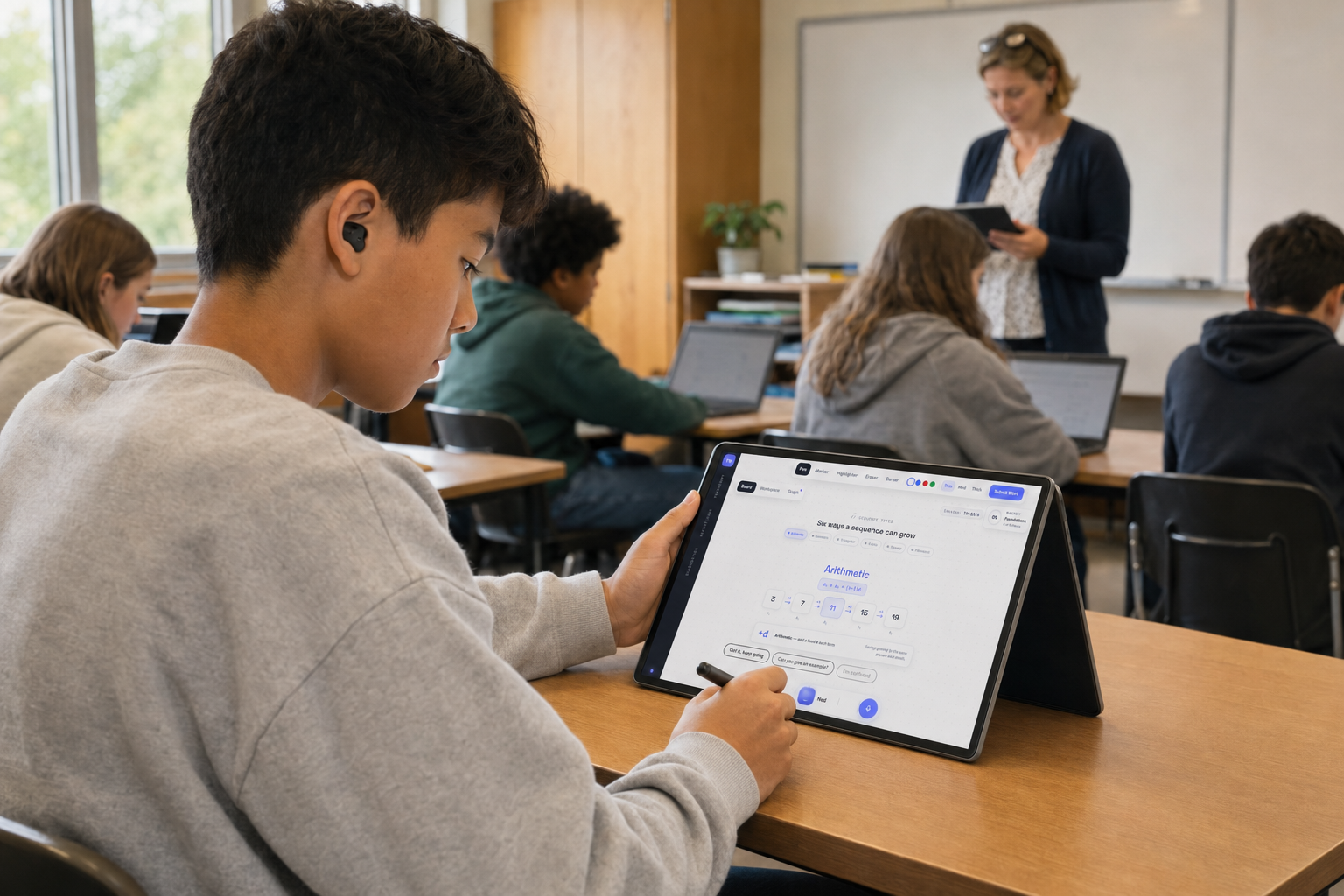
TechNedBrings one on one instruction within reach of every student, turning the kind of personal attention once reserved for a few into something every learner can have.
02
Zone of Proximal Development
Lev Vygotsky
Students learn best in the narrow band just beyond what they can do alone, challenging enough to grow, supported enough to succeed. Too easy and they coast; too hard and they shut down.
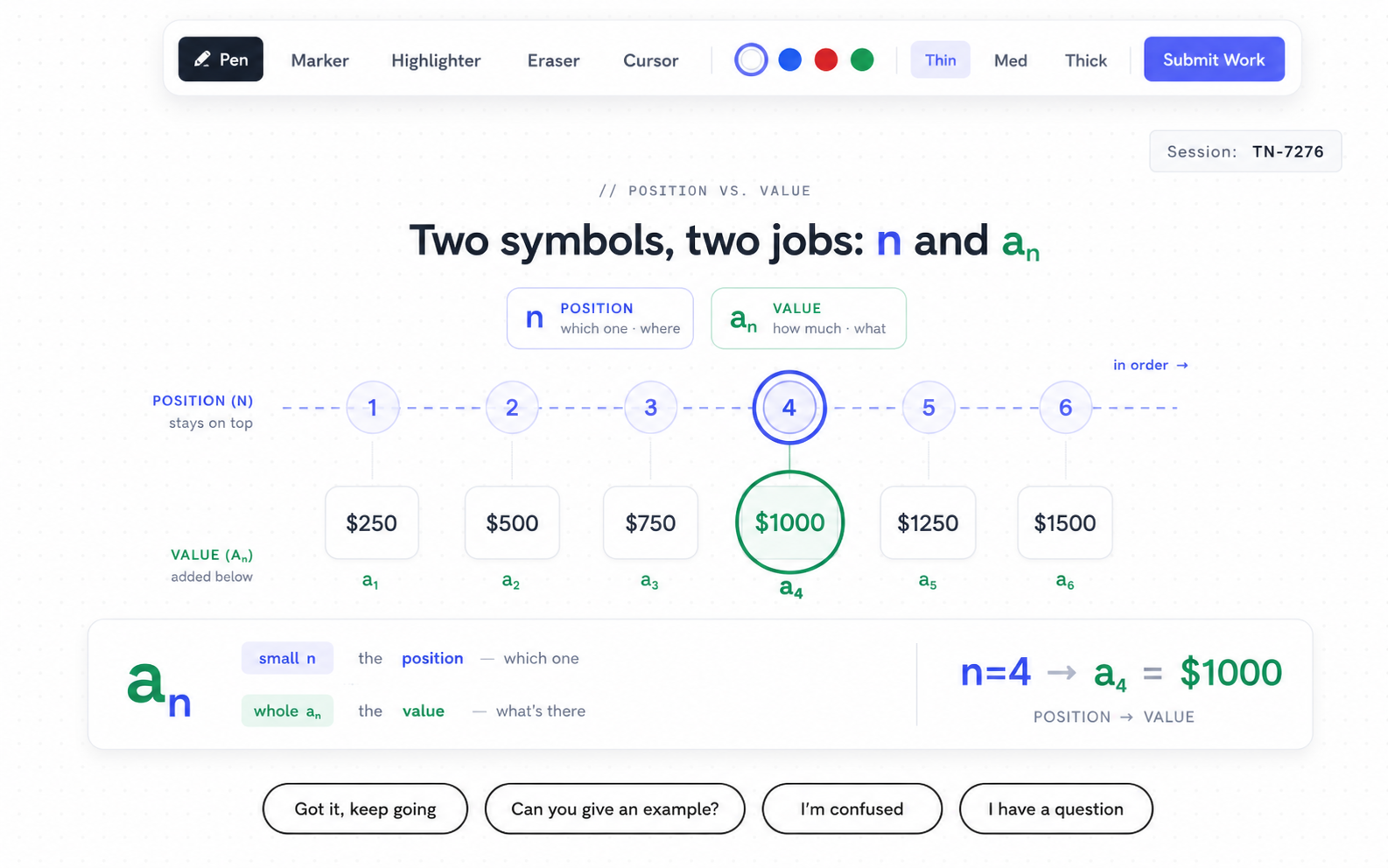
TechNedA short diagnostic at the start of each topic calibrates language and gauges what a student already understands. The topic is then taught across focused sessions, and when a student gets stuck, TechNed balances gentle scaffolding with clear, direct answers, so confusion becomes a step forward instead of a dead end.
03
Bloom’s Taxonomy
Benjamin Bloom, 1956
Real understanding is a ladder, from remembering and understanding, up through applying and analyzing, to evaluating and creating. Drilling recall alone leaves students stranded on the bottom rung.
TechNedMoves students up the ladder, not just through it, pushing past memorization toward reasoning, judgment, and the confidence to create.
04
Connectivism
George Siemens & Stephen Downes
Connectivism puts the learner at the center, empowering students to take agency over their own learning instead of passively receiving information. Real understanding grows through active participation, not delivery alone.
TechNedTechNed strikes a balance between that agency and a structured instructional framework. The student helps drive the lesson while staying guided through it, and progress depends entirely on their own engagement, responses, and demonstrated understanding.